


Walk into any sporting goods store — or scroll any gear site — and you'll find a thousand products that promise to make you a better football player. Most of them won't. This guide cuts the list down to what players actually need in 2026, from youth leagues through college, and flags the gear that gives you a real, rules-legal edge on game day.
We build gear for a living, so we'll be upfront about how we picked: everything on this list is (1) legal for game use under NCAA and NFHS rules, (2) used by real players at the high school and college level, and (3) solving a problem players actually have. Where the best option is something we don't make — helmets, cleats, footballs — we name the brands teams actually buy instead of pretending those categories don't exist.
The Core Checklist: What Every Player Needs
- Helmet — issued by your team at most levels; buying your own means Riddell, Schutt, or Xenith
- Shoulder pads — usually team-issued; fit matters more than brand
- Cleats — the one big purchase every player makes themselves
- Mouthguard — required at every level; the piece most players cheap out on and regret
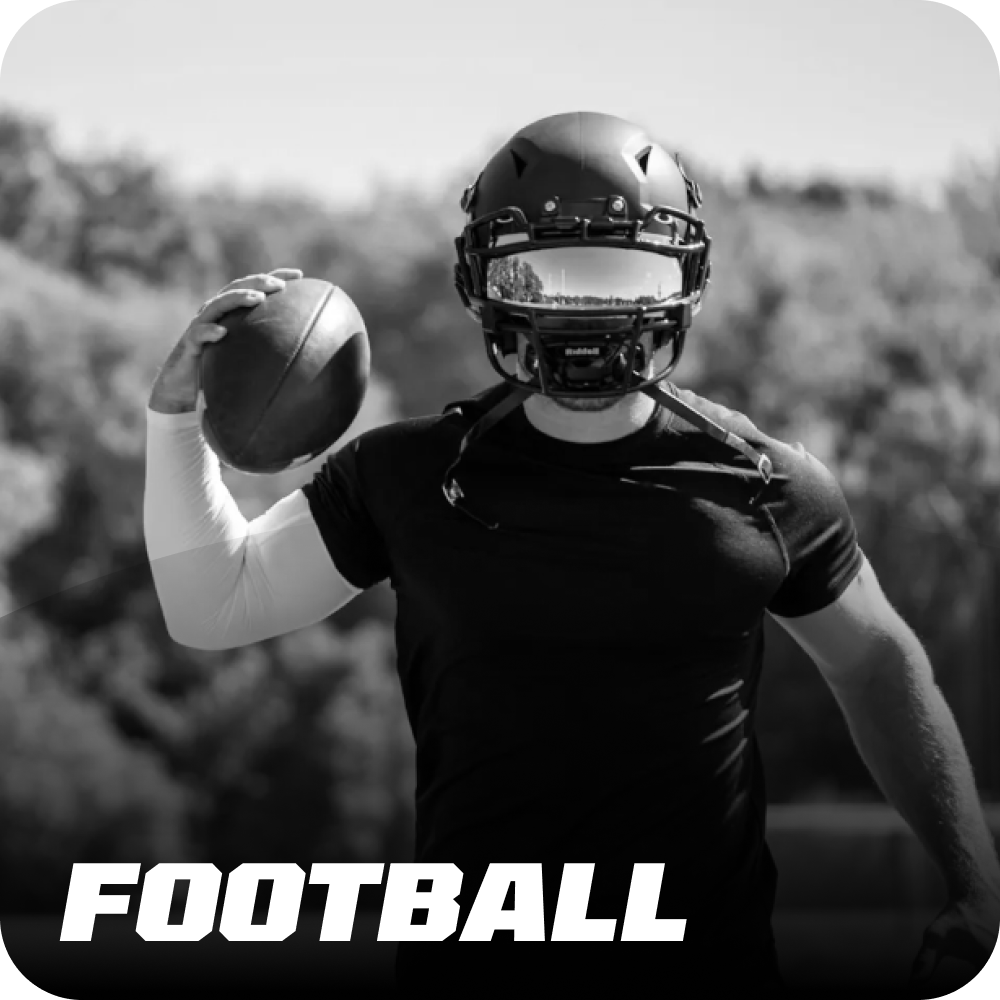
- Grip sleeve or arm sleeve — standard equipment for skill players; only one is engineered to grip the ball
- Compression base layer — worn under pads year-round
- Gloves — position-dependent
- Cold-weather gear — hand warmer and sleeves for late-season games
Let's go category by category.
Helmet and Shoulder Pads
At the youth and high school level, helmets and shoulder pads are almost always issued by the team, and that's fine — what matters is that the helmet carries current NOCSAE certification and has been reconditioned on schedule. If you're buying your own, the market leaders are the Riddell SpeedFlex family, the Schutt F7, and Xenith's Shadow line. Fit beats features: a properly fitted mid-range helmet protects better than a flagship model that rocks on your head.
Cleats
Cleats are the one major purchase nearly every player makes on their own. Nike's Vapor Edge line and adidas Adizero dominate skill positions for a reason — they're light and they cut hard. Under Armour's Highlight line remains popular for players who want ankle coverage. Two rules of thumb: molded cleats for artificial turf, and replace them every season — worn studs are a quiet cause of slipping on cuts.
Mouthguard: The Most Underrated Piece of Gear
Every level of football requires a mouthguard, and it's the piece players spend the least on — a mistake you only make until you catch a facemask to the mouth.
The Vettex DoubleGuard ($16.99) is our pick, and not just because we make it: it's one of the only mouthguards with a built-in lip protector, which is why the Vettex name has been trusted in mouthguards for decades. It's a pre-formed, ready-fit design — no heat molding required, which is exactly what makes it safe for players with braces — it comes in 20+ colors to match any team, and the adjustable strap attaches to the facemask so it never gets lost on the field. For the full breakdown of mouthguard types — including custom-molded options — read our football mouthguard buyer's guide.
Grip Sleeve: The Legal Edge for Skill Players
Arm sleeves became standard equipment for receivers, backs, and defensive backs years ago — but almost all of them are basic compression fabric that does nothing for ball control. The Vettex Grip Sleeve ($28) is the exception: it's built around a patented grip-enhancing textile (U.S. Patent No. 11,957,549) woven directly into the fabric, so the surface of your forearm actively grips the football on catches, tucks, and carries.
It earned the first-ever NCAA approval for a grip-enhancing wearable — the grip is structural to the textile, not a substance applied to the player, so it's fully NCAA and NFHS legal with no special approval needed. Players on 40+ FBS programs wear it, and it comes in youth sizes for ages 6–14. If you play a position that touches the ball, this is the highest-impact $28 on this list. Full details in our football arm sleeve guide.
For warm-weather practices and 7-on-7, the Vettex Dry Sleeve ($18) skips the grip technology in favor of lightweight, quick-dry TurboDry® fabric — all speed and comfort while keeping arms covered on turf.
Compression Base Layer
A compression shirt under your pads keeps muscles warm, manages sweat, and protects your torso from pad rub. The Vettex Compression Grip Shirt ($65) extends the same patented grip textile across the chest and arms — receivers use it to secure the ball against their body through contact, and ball carriers use it for high-and-tight security. For everyday practice wear, the Vettex Dry Compression Shirt ($55) is the moisture-wicking workhorse.
Football Gloves
For receivers and defensive backs, gloves are personal — grip pattern, fit, and wrist closure all come down to preference, and Nike and adidas both make excellent sticky-palm options at every price point. One honest note: gloves and a grip sleeve solve different problems. Gloves help your hands; a grip sleeve helps everywhere else the ball touches — forearm tucks, body catches, and ball security through contact. Most serious skill players wear both.
Cold-Weather and Comfort Gear
- Vettex Football Hand Warmer ($20) — a fleece-lined, weather-resistant pouch with an adjustable strap; standard issue for quarterbacks and receivers once temperatures drop.
- Vettex x Mission Cooling Helmet Liner ($16.99) — the opposite problem: keeps your head cool under a helmet during August two-a-days.
- Clear visor — Oakley makes the standard. Note that clear visors are legal at essentially every level, while tinted visors generally require a documented medical exception in NFHS and NCAA play.
Position-by-Position Quick Picks
- Wide receiver / tight end: grip sleeve, gloves, DoubleGuard, grip shirt for contested-catch work
- Running back: grip sleeve on the carrying arm, grip shirt for ball security, mouthguard with lip protection
- Defensive back: grip sleeve for press coverage and pass breakups, gloves, dry sleeve for practice
- Quarterback: hand warmer for cold games, grip sleeve on the throwing arm in wet weather, mouthguard
- Linemen: quality mouthguard (you take more facemask contact than anyone), compression shirt, dry sleeves for turf burn
Youth vs. High School vs. College
Youth players (6–14): the team issues the expensive protective gear — spend your money on a properly fitted mouthguard, cleats that fit this season, and a youth-sized grip sleeve if they play a skill position. High school players: this is where personal gear starts to matter competitively; beyond cleats, the mouthguard–grip sleeve–base layer stack covers a varsity player for right around $100. College: everything above applies, and everything above is NCAA legal — which is exactly why we build to that standard.
Free shipping on all orders over $60. Browse the full Vettex football collection.
Frequently Asked Questions
What football gear do players actually need?
Every player needs a NOCSAE-certified helmet and shoulder pads (usually team-issued), cleats, and a mouthguard. Skill position players add a grip sleeve or arm sleeve, gloves, and a compression base layer. Cold-weather additions include a hand warmer and heavier sleeves.
What is the best football gear for wide receivers?
Receivers benefit most from sticky-palm gloves, a grip-enhancing arm sleeve like the Vettex Grip Sleeve for forearm tucks and body catches, a compression grip shirt for securing the ball through contact, and a low-profile mouthguard. Cleats built for sharp cuts — like Nike Vapor Edge or adidas Adizero — round out the setup.
Is grip-enhancing gear legal in football?
The Vettex Grip Sleeve and Compression Grip Shirt are fully NCAA and NFHS legal. The grip property is structural to the patented textile itself (U.S. Patent No. 11,957,549), not a tacky substance applied to the player, which is what earned the first-ever NCAA approval for a grip-enhancing wearable.
How much does a full set of football gear cost?
With the helmet and pads team-issued, a player can be fully equipped for roughly $180–$260: cleats ($80–$150), mouthguard ($17), grip sleeve ($28), and a compression base layer ($55–$65). Youth players can get by for less since gloves and base layers are optional at that level.
What football gear should a youth player buy first?
In order: a properly fitted mouthguard with lip protection, cleats that fit this season (not next), and — for skill position players — a youth-sized grip sleeve. Youth leagues issue helmets and pads, so personal spending should go toward the contact points: mouth, feet, and hands.
Do football players need both gloves and a grip sleeve?
They solve different problems. Gloves improve grip in your hands; a grip sleeve improves control everywhere else the ball touches — the forearm tuck, body catches, and carry security. Most serious skill position players wear both, and defensive backs often prioritize the sleeve for press coverage.
Keep Reading
- Best Gifts for Football Players in 2026 — 15 ideas they'll actually use, organized by budget
- Best Football Arm Sleeves 2026 — the deep dive on grip, protection, and performance
- Best Football Mouthguard 2026: Buyer's Guide — braces, lip protection, and sizing
- How to Stop Fumbling — ball security drills to go with the right gear
- Vettex Grip Sleeve Review — why 40+ FBS programs trust it


